Guard Tour Basics
What Is a Guard Tour System? A Complete Guide to Patrol Tracking
A plain-English guide to guard tour systems: what they are, how checkpoint scanning works, the difference between NFC, QR, and GPS, and what to look for when choosing one.
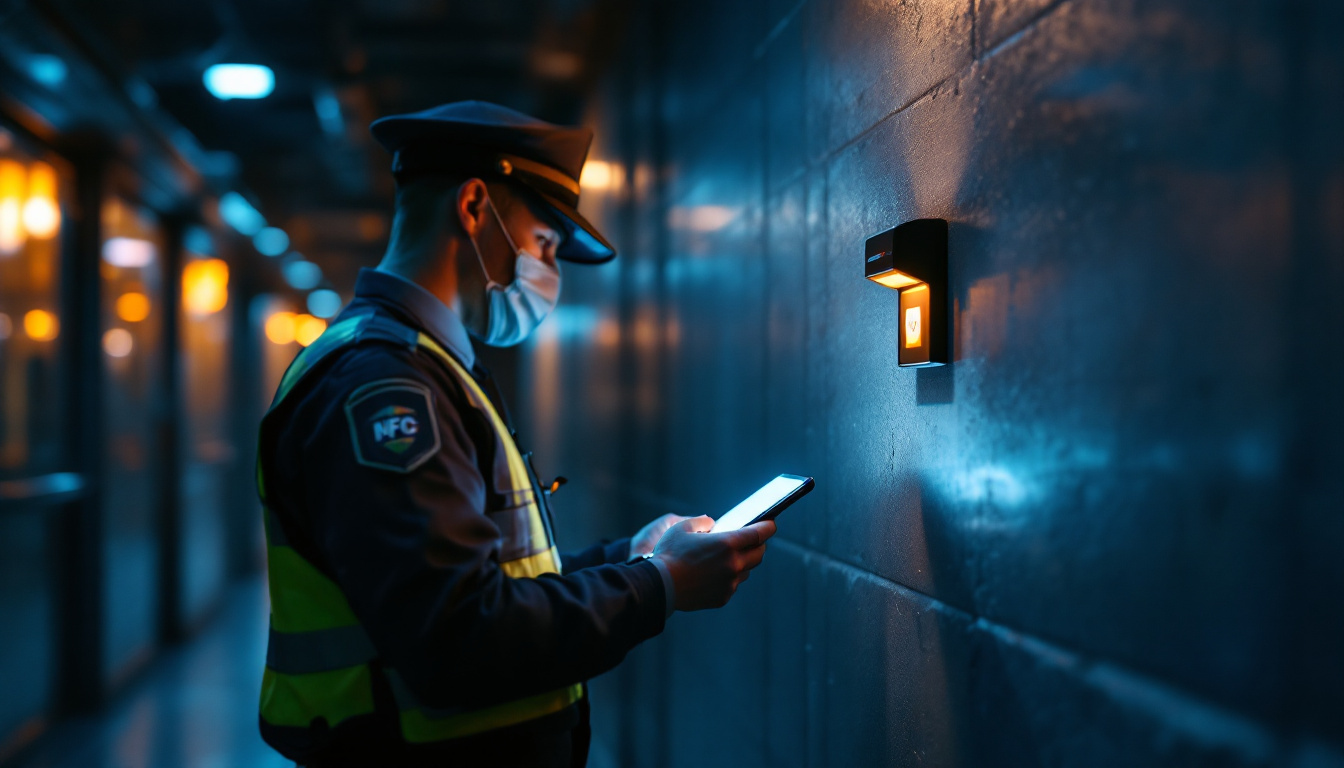
A guard tour system is the technology security teams use to prove that patrols actually happened. Instead of relying on a paper logbook and trust, guards scan checkpoints as they move through a site, and each scan is stamped with a time, a location, and the guard's identity. The result is a verifiable record of who was where, and when.
If you manage security for a property, run a guarding company, or simply want to understand what your provider is charging you for, this guide walks through what these systems do, how the checkpoint technology works, and what separates a good system from a box-ticking one.
The problem guard tour systems solve
Security patrols have always had a trust gap. A client pays for a guard to walk the perimeter every hour through the night, but how does anyone confirm it happened? For decades the answer was the mechanical "watchclock" — a guard carried a clock-like device and turned a key fixed at each station to punch a paper tape. It proved presence, but it was clumsy, easy to game, and told you nothing until you collected the tape.
Modern guard tour systems close that gap. They give the guard a phone or a rugged handheld reader, place small checkpoints around the site, and record every scan to the cloud. Supervisors see missed patrols the moment they happen rather than the morning after, and clients get a clean report instead of a shoebox of tapes.
How checkpoint scanning works
The core idea is simple. You fix a set of checkpoints at the places that matter — entrances, stairwells, server rooms, fuel tanks, the far corner of a car park — and the guard scans each one as they reach it. Every scan captures three things: which checkpoint, what time, and which guard. String those scans together and you have a documented tour.
The difference between systems comes down to how the checkpoint is read. There are three common technologies:
- NFC tags. Small passive stickers or discs, the same technology as a contactless payment card. The guard taps a phone or reader against the tag and it registers instantly. NFC tags are cheap, need no power, work in the dark, and are hard to fake because each has a unique chip ID.
- QR codes. A printed code fixed to a wall or post that the guard scans with a camera. QR is the lowest-cost option and easy to deploy, but codes can be photographed and re-scanned from elsewhere unless the system adds safeguards like GPS or timestamp validation.
- GPS / geofenced points. No physical tag at all. The system records the guard's satellite location when they mark a checkpoint. This suits large outdoor sites, construction, and mobile patrols where fixing tags everywhere is impractical, though it is less precise indoors and near tall buildings.
Many systems mix these. A common setup uses NFC tags indoors for reliability and GPS for outdoor rounds, all feeding the same report.
What happens after the scan
A scan on its own is just data. The value is in what the system does with it. A capable guard tour system will:
- Push scans to the cloud in real time, so a supervisor watching a dashboard sees the tour progress live.
- Alert someone when a patrol is missed, late, or skipped — the single most useful feature, because it catches problems while the shift is still on.
- Let guards attach photos, notes, or incident reports to a checkpoint, so a broken lock or an open gate is documented on the spot.
- Generate client-ready reports automatically, showing completed tours, exceptions, and incidents over any date range.
That last point is often what actually gets a company to buy. A polished, automatic report is proof of service delivery, and it is what protects the contract when a client asks why they are paying for overnight coverage.
The main benefits
For the guarding company, the payoff is accountability and evidence. You can show a client exactly what was patrolled, respond to "nobody came" disputes with a timestamped record, and spot the guard who quietly skips the cold end of the route. Real-time alerts also improve safety: if a lone guard stops checking in, someone notices.
For the client or property manager, it is peace of mind and a paper trail. You are buying a service you cannot personally watch, and the report is the closest thing to watching it. In regulated or high-liability settings — warehouses, data centres, hospitals, industrial sites — that documentation also supports insurance and compliance requirements.
What to look for when choosing one
Not every system fits every operation. A few questions cut through the marketing:
- Does it work offline? Guards patrol basements, stairwells, and remote sites with no signal. The reader should store scans locally and sync when it reconnects, not lose them.
- How are missed patrols handled? Look for configurable schedules and automatic alerts, not just a log you review later.
- How hard is it to cheat? Unique NFC chip IDs, GPS validation on QR scans, and photo prompts all raise the bar against a guard scanning from the break room.
- Is the reporting genuinely client-ready? You want branded, readable reports you can send without reformatting.
- What does the checkpoint hardware cost, and does it need power or maintenance? Passive NFC and printed QR are cheap and maintenance-free; anything battery-powered adds ongoing work.
- Does it scale to multiple sites and clients? If you run more than one contract, you want one dashboard across all of them.
Price matters, but the cheapest option that guards can easily game costs more in lost contracts than it saves. The goal is a record you would be comfortable showing a skeptical client.
Guard tour system vs guard tour app
For a large guarding company with many sites, a full guard tour system — sometimes sold as guard management software — earns its keep: live dashboards, multi-site reporting, and scheduling across dozens of guards. For a single guard or a small operator, most of that is weight you will never use. If that is you, a lightweight guard tour app that scans checkpoints and exports a PDF may be all you need.
It also helps to see how the big platforms compare. If you are weighing a specific vendor, these breakdowns cover the trade-offs against a simpler tool: TrackTik alternative, Silvertrac alternative, and QR-Patrol alternative.
Frequently asked questions
How much does a guard tour system cost? It ranges widely. Checkpoint hardware is cheap — a passive NFC tag costs less than a coffee and printed QR codes are effectively free. The real cost is the software, usually billed per guard or per site each month. A single guard can start with a free guard tour app; a multi-site company pays more for dashboards and real-time monitoring.
What's the difference between a guard tour system and a guard tour app? A guard tour app runs on the guard's phone to scan checkpoints, log the patrol, and export a report. A full guard tour system (or guard management software) adds a live dashboard, real-time alerts, multi-user roles, scheduling, and multi-site reporting — aimed at a company managing many guards. Solo guards and small teams rarely need the full platform.
Which checkpoint technology is best — NFC, QR, or GPS? NFC is the most reliable indoors and hardest to fake; QR is the cheapest and easiest to deploy; GPS suits large outdoor sites with no fixed tags. Many systems combine them — NFC indoors, GPS outdoors.
Do small security companies need a guard tour system? Often a simpler tool is enough. If you run one or a few guards on one site, a free, offline guard tour app that scans checkpoints and produces a PDF report covers what actually matters, without per-seat billing or setup.
The bottom line
A guard tour system turns "trust me, we patrolled" into a record anyone can verify. The technology is mature and affordable — an NFC tag costs less than a coffee, and the software runs on a phone the guard already carries. What separates systems is not the scan itself but everything around it: real-time alerts, tamper resistance, offline reliability, and reporting a client will actually read. Get those right and a guard tour system stops being a compliance chore and becomes the clearest proof of the work your team does every night.